How Russia (yes, Russia) plans to land cosmonauts on the Moon by 2030
"Very difficult times are ahead for our space program."

The Russian plan
Via Robinson Mitchell, Ars obtained a copy of the slide deck Rogozin used for his speech and a translation of its contents (key slides are shown above). Of particular interest is the speech's focus on an independent lunar landing featuring cosmonauts by 2030. Taken at face value—which probably is not wise, given the big question of how Russia would fund such an enterprise—a Russian attempt to land humans on the Moon a decade from now would set up an extraordinary race among that country, NASA's Artemis Program, and China's lunar ambitions.Under the plan outlined by Rogozin, the country will initially develop a new "Super Heavy" booster with a capacity of 103 metric tons to low Earth orbit and 27 metric tons to Lunar polar orbit. This is roughly equivalent to an upgraded version of NASA's Space Launch System, known as Block 1B.
The plan includes the development of the "Federation" spacecraft by 2022, with its first flight to the International Space Station by 2023. Deep-space flights of this spacecraft would follow in the mid-2020s, along with a return of lunar soil to Earth using the Luna-Grunt probe in 2027.
Doubting Rogozin
The speech comes amid questions about the future of Rogozin. Rumors have been swirling about whether he will soon be removed from the job. A respected Russian aerospace analyst, Vadim Lukashevich, shared some thoughts about the speech on his Facebook account.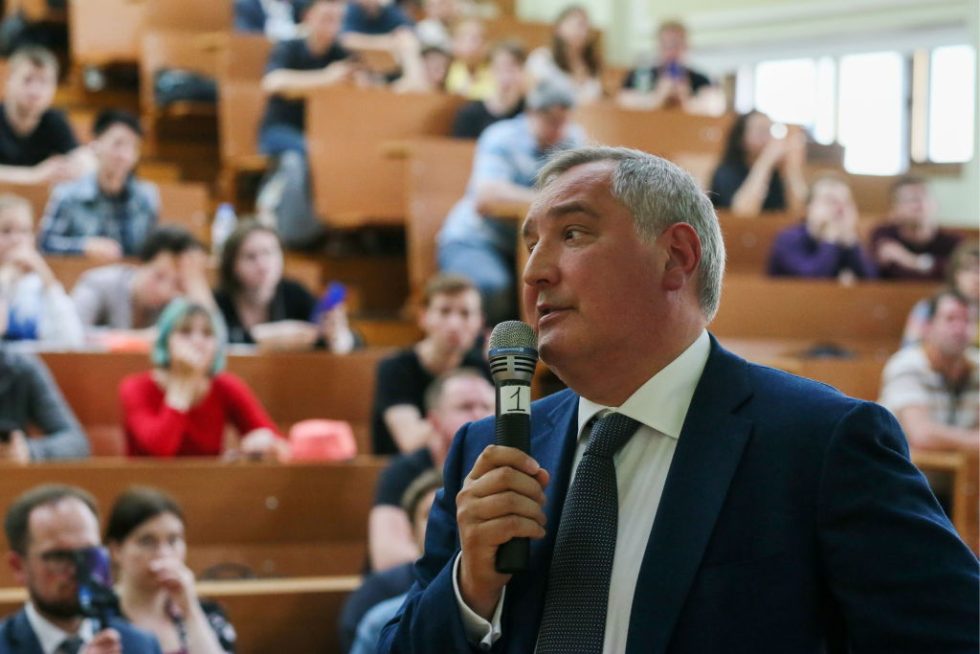
These difficulties may include a troubling trend in Russian rocket failures, an uncertain future with its long-standing NASA partnership, funding issues, and more. For this reason, it is difficult to envision Russia launching an ambitious program to land on the Moon, but as ever, the country's progress (or lack of) will be worth tracking.

No comments:
Post a Comment